
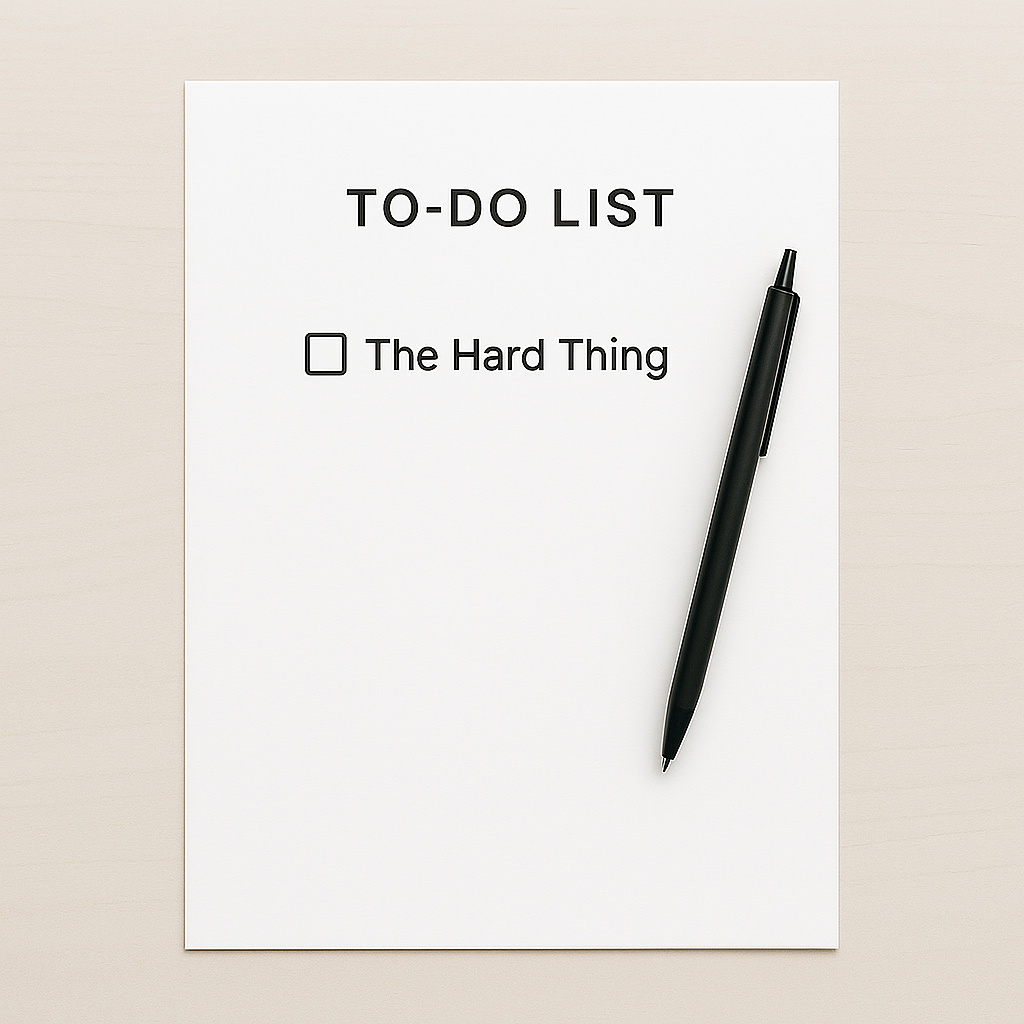
We all know what the hard thing is. It’s that uncomfortable task you keep pushing to the edge of the to-do list. It sits there for hours, days, maybe weeks—while easier tasks get ticked off. But ease is deceptive. While you’re staying busy, you’re not moving forward. The hard thing is usually the important thing. It’s the thing you fear, the thing that will stretch you, the thing that matters.
We avoid hard things not because they’re impossible but because they expose us. They reveal what we don’t yet know, challenge our sense of ease, and threaten our illusion of competence. So we turn to what feels safe: emails, errands, shallow work. The illusion of productivity grows, but nothing of substance shifts.
The Brain Loves the Path of Least Resistance
Your brain is wired for survival, not success. It craves the path of least resistance. Hard things feel like danger—even when they aren’t. Your brain fires off stress signals when you face uncertainty, and hard tasks often come with emotional risk: failure, judgment, friction. But that reaction doesn’t mean you’re on the wrong path. It means you’re about to grow.
Neuroscience tells us that willpower is a limited resource. You wake up with more of it than you’ll have later. That’s why early hours are golden. If you spend them on scrolling or shallow work, you’ve wasted your sharpest mental weapon. But if you attack the hardest task first, you build momentum that carries through the rest of the day.
Hard First, Easy Later
Doing the hard thing first flips your internal narrative. You stop seeing discomfort as something to avoid and start treating it as a signal to act. When you tackle the difficult early, you turn anxiety into energy. The rest of the day feels easier not because it is, but because you’ve already lifted the heaviest weight.
Think of a cold shower. The first seconds sting. But after, you’re awake, alert, ready. Hard things work the same way. They shock your system into alertness. They remind you that you are not ruled by comfort.
Examples from Real Life
Writers often avoid the blank page by rearranging their desks. Students reread notes instead of testing their memory. Professionals check email rather than pitch an idea that could be rejected. But the writer who opens the document and writes the first bad sentence, the student who tries to recall without looking, the professional who makes the call—they’re the ones who move forward.
They don’t wait to feel ready. They act, and readiness follows.
The Domino Effect of Discipline
Doing the hard thing first builds self-trust. You prove to yourself that you can face discomfort without retreating. And self-trust compounds. It makes the next hard thing slightly easier. Soon, discipline is no longer about forcing yourself to act—it’s your default.
This is the compound interest of effort. One hard task a day turns into a strong habit, a better career, a different life. You’re not just getting things done. You’re becoming someone who doesn’t flinch when things get difficult.
How to Apply It
Don’t wait for motivation. Create a rule: the first thing you do each day must be the thing you want to avoid. Break your day with intention, not instinct. Set one hard priority. Protect the time around it. Remove distractions before they beg for your attention. And once you begin, don’t stop until the first resistance breaks.
It might be writing 300 words. It might be making a hard call. It might be a 20-minute workout. Whatever it is, do it before the world can interrupt.
Build a Life That Leans into Friction
Most people design their lives to reduce discomfort. But growth lives where comfort ends. Don’t escape friction—lean into it. Build a rhythm around doing what’s hard, and ease will feel like a reward, not a requirement.
You weren’t built to stay the same. That knot in your stomach before a big task? That’s not fear. That’s the signal that you’re about to step into a higher version of yourself.
Final Thoughts
Doing the hard thing first isn’t about punishment—it’s about power. It’s how you take control of your time, your focus, your life. It’s how you stop drifting and start directing. Start your day with the hard thing, and everything after becomes lighter.
Most people wait to feel brave. But courage isn’t something you feel before—it’s something you earn by acting. The clock is ticking. The list is waiting. And the hard thing is staring back. Pick it up first.
That’s how you build a life worth living.


Leave a Reply