
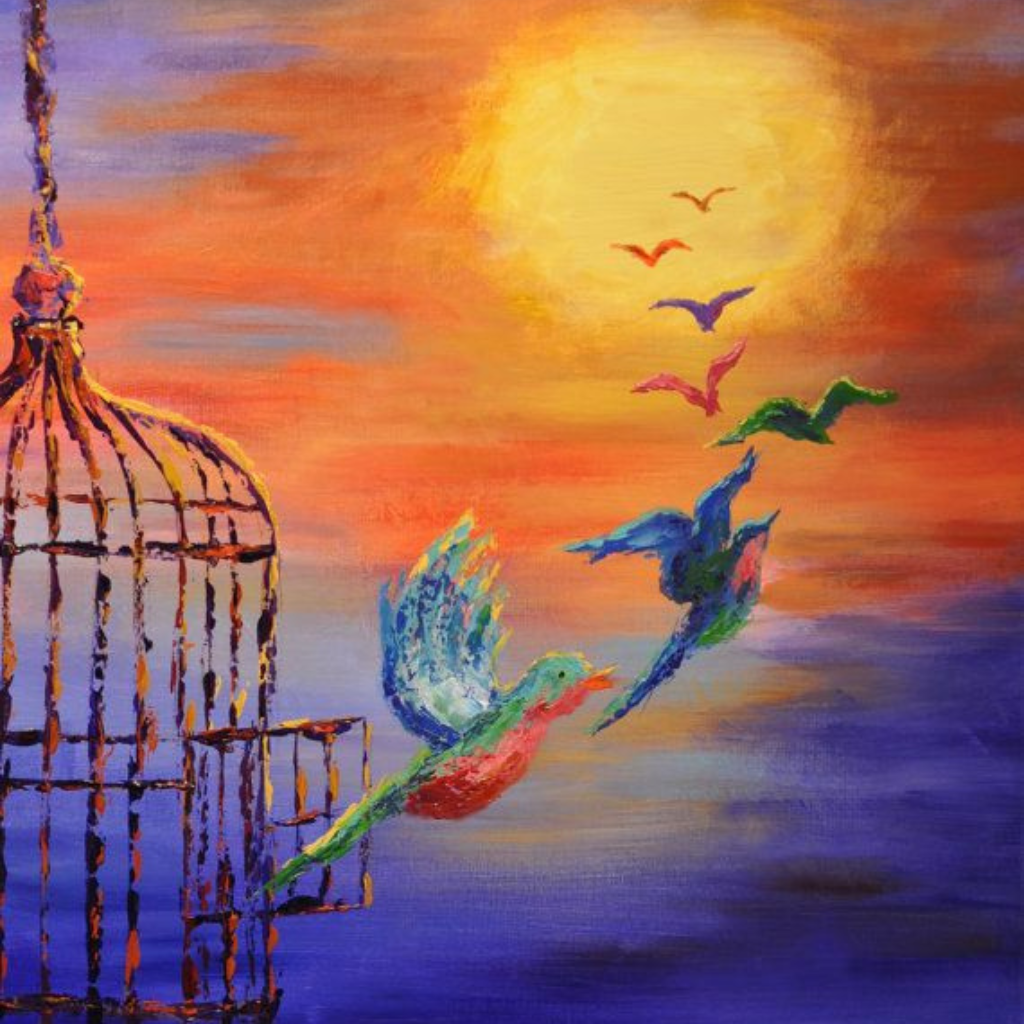
Freedom is one of the most attractive ideas a person can chase. The thought of living without being told what to do, when to wake up, when to eat, when to work, and when to sleep feels like the ideal life. Most people imagine freedom as peace. We imagine a life with no pressure, no rules, and no external demands. On the surface, it sounds like the ultimate reward.
But freedom has a side that people rarely talk about. When you wake up without anyone needing you, eat without structure, work only when you “feel like it,” and sleep whenever you want, the question becomes: Is that freedom, or is it loneliness? The same openness that feels liberating in the beginning can become heavy over time. What looked like space can start to feel like emptiness.
The problem is not freedom itself. Freedom is valuable. The problem is what happens when freedom comes without direction. A person can become free from society, yet slowly become a slave to mood, comfort, distraction, and environment. That is the contradiction: the freer a person becomes externally, the more disciplined they must become internally.
Freedom Gives You Time, but Not Purpose
With freedom comes an ocean of time. At first, that sounds like a blessing. More time to think, create, build, rest, and enjoy life. But time on its own is not enough. If you do not know what you are aiming at, too much time can actually make you worse. It can make you slower, less focused, and more wasteful.
A person who chases everything usually catches nothing. When there are too many choices, attention gets scattered. You start one thing, then move to another, then another, and convince yourself you are being productive because you are “doing a lot.” In reality, nothing meaningful is moving forward. The day ends, and all that remains is the feeling that time passed without substance.
This is one of the hidden costs of freedom: it removes forced priorities. When no one is setting your deadlines, your mind starts negotiating with itself all day. Should I work now or later? Should I rest first? Should I start with the difficult task or do something easier? Should I plan more before I begin? These choices seem small, but they drain energy. By the time you finally decide, the best part of your focus is already gone.
Why Limits Can Wake You Up
If someone told you that you would die in five years, your entire relationship with time would change. You would not waste hours scrolling without purpose. You would not delay important work for “tomorrow” as casually. You would become more intentional, not because you suddenly gained motivation, but because time would become real to you.
Death is already real, of course, but for most of us it feels distant. It is close enough to be true, but not close enough to shape our daily decisions. That distance creates carelessness. We live as if life will keep renewing itself. We assume there will always be another week, another month, another year to do what matters.
That is why limitation can sometimes be a gift. A limit forces clarity. It removes the illusion that you can do everything later. It creates urgency, and urgency often reveals what truly matters. People often say they need motivation, but what they really need is a reason to stop wasting time. Sometimes the thing that wakes you up is not inspiration; it is the pressure of a boundary.
The Peace We Get from Structure
Most people think structure is the enemy of freedom, but in many cases, structure is what protects freedom from turning into waste. A deadline can sharpen your focus. A routine can protect your energy. A schedule can reduce mental chaos. Even a simple personal rule can save hours of lost time.
Human beings do not always thrive with unlimited choice. In fact, many people do better within meaningful constraints. Tell someone they have all day to complete one task, and they may procrastinate until night. Tell them they have one focused hour, and suddenly they become efficient. It is not because they became smarter in that hour. It is because the limit removed room for drift.
There is also peace in not having to renegotiate everything. When your day has no structure, every action becomes a decision, and every decision becomes a battle between what matters and what feels good in the moment. That constant internal debate is exhausting. Structure reduces that noise. It allows you to move with intention instead of living at the mercy of your emotions.
You Can Be Free, but You Must Also Be Held
This is where many people get confused. They think the goal is to be completely free, with no obligations and no limits. But total freedom is not always peace. In many cases, peace comes from order, rhythm, and responsibility. It comes from knowing what matters and building your life around it.
You can be free, but you still need to be held. Not necessarily by society, not always by other people, but by principles, habits, and self-imposed boundaries. If no one is keeping you on deadline, you must learn to keep yourself on deadline. If no one is watching what you do with your day, you must become honest enough to watch yourself.
This is especially true for people who work for themselves, create for themselves, or live outside traditional routines. The freedom is real, but so is the danger. Without discipline, freedom becomes self-sabotage disguised as independence. Days become loose. Standards drop. Time gets spent, but not invested.
The Real Cost of Freedom
Freedom has a high price, and that price is self-accountability. The more free you are from external systems, the more responsibility you carry to build internal systems. If you do not build them, your environment will build your life for you. Your phone, your mood, your fatigue, and your distractions will decide how your time is spent.
That is why the answer is not to reject freedom, but to respect it. Freedom is powerful, but it is not self-managing. It needs direction. It needs discipline. It needs intention. Otherwise, what should have been a gift becomes a slow leak of time and potential.
So yes, be free, but not so free that your life has no shape. Be flexible, but not so flexible that your goals move with every emotion. Protect your time, because no one else will do it for you. In the end, the goal is not to live without limits. The goal is to choose your limits wisely so your freedom becomes useful, not wasted.


Leave a Reply