
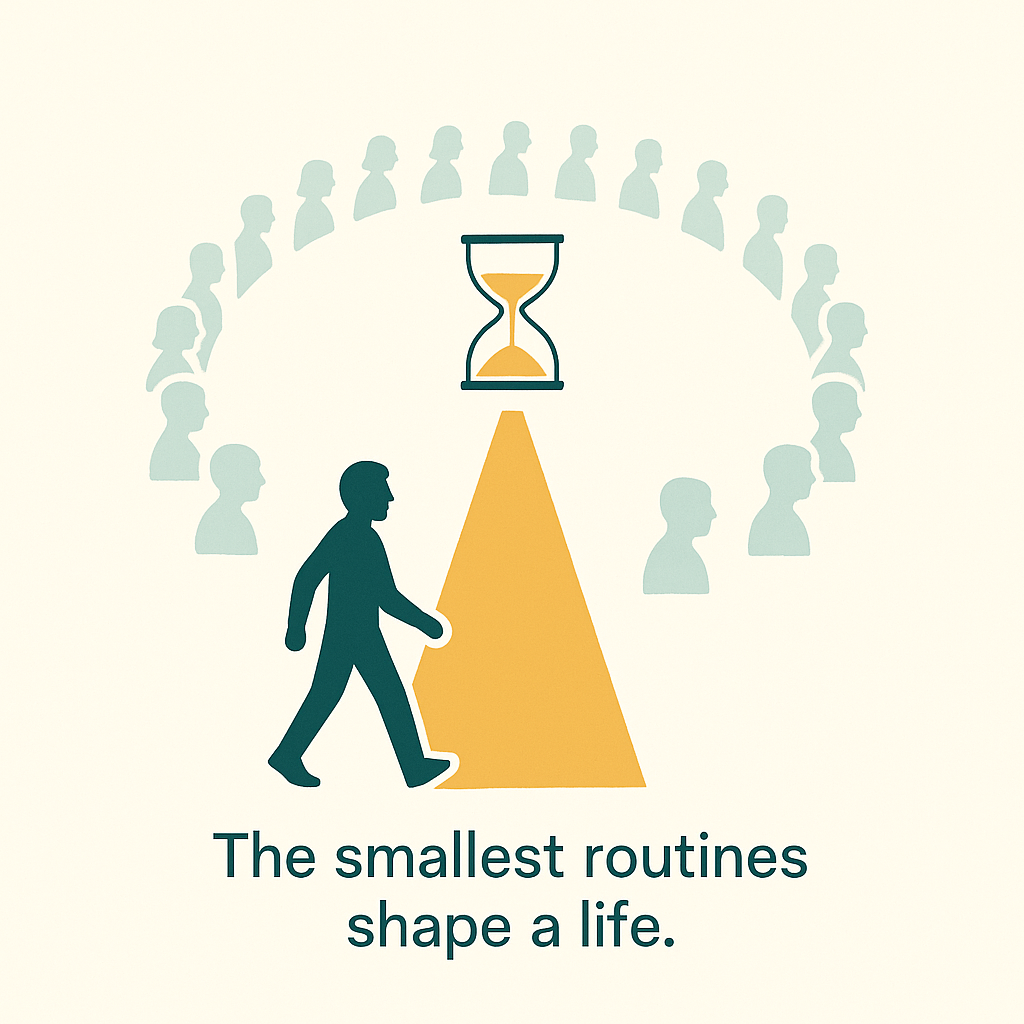
We spend so much time chasing big wins that we often overlook the quiet force that shapes who we are: the small things we do each day. A single routine, so ordinary it hardly seems worth noting, can shape character more deeply than a single burst of effort. It is through small, repeated acts that habits form, identities settle, and change becomes real.
We like to believe change comes from willpower or grand plans. We imagine turning our life around with a single decision: the new diet, the new schedule, the fresh start. But when the excitement fades, we see the truth. Real change rarely arrives like lightning. It moves like water, carving stone not through force but through patience and repetition.
The Weight of What Seems Small
The smallest routines are easy to ignore. Brushing your teeth, making your bed, turning off your phone before sleeping. They don’t seem heroic. They won’t appear on social media or win praise. But they teach something deeper: consistency, discipline, and care.
Imagine someone who writes for five minutes each morning. Five minutes isn’t much. It won’t produce a book overnight. But across weeks and months, words add up. The routine becomes a ritual, the ritual becomes identity. “I write” becomes “I am a writer.” In this way, the smallest effort can open the door to a larger life.
Routines Build Identity
Your mind watches what you do more than it listens to what you say. Each repeated action is a vote for who you believe you are. If you show up at dawn to run, even when you’re tired, you prove to yourself that health matters. If you read each night instead of scrolling, you prove to yourself that curiosity matters. The effect is subtle at first. But over time, it becomes self‑trust.
We often look to goals to define us. But identity isn’t built on the promise of what we might do; it’s built on the quiet proof of what we do each day. The small routine matters not because of what it achieves today, but because of what it teaches us about who we are.
The Danger of Waiting for Motivation
Big plans feel exciting. But they often rely on bursts of motivation. And motivation fades. It is by nature unpredictable, tied to mood, energy, and circumstance. Small routines don’t wait for the right mood. They don’t demand inspiration. They ask only that you show up.
Think of the musician who practices scales each morning. The student who reviews notes each evening. The habit itself becomes the anchor. On days when enthusiasm fails, the routine remains. Over time, this removes the biggest obstacle to growth: inconsistency.
The Science Behind Small Steps
Psychologists have found that habits form through repetition. Each time you repeat an action, you strengthen the neural pathway that makes it easier to do again. This is why small routines matter. They’re repeatable, and because they’re repeatable, they’re sustainable.
Consider the idea of habit stacking — linking a small new habit to an existing routine. You drink coffee each morning; add two minutes of reflection. You finish lunch; walk for five minutes. Small enough not to provoke resistance. But repeated enough to become automatic.
Why Small Routines Outlast Big Goals
Big goals often fail because they ask too much, too soon. They demand perfection and punish failure. Miss one day, and guilt arrives. Miss a week, and the goal feels lost. Small routines, on the other hand, forgive. If you miss once, it doesn’t matter. You return the next day. Progress continues, quietly, like a river finding its way.
Over years, these small routines do what big plans rarely do: they last. And because they last, they shape more than any single heroic effort could.
Examples That Prove the Power
History and everyday life offer endless examples. Writers like Ernest Hemingway famously stopped mid‑sentence each day, so the next morning’s work would be easier. His routine wasn’t to write endlessly, but to write daily, and to stop wanting to write more. Artists sketch simple studies daily, not always masterpieces, but practice. Scientists record daily observations, building decades of insight one quiet entry at a time.
Even in ordinary life, the principle holds. A parent reads to a child for ten minutes each night; the child grows up loving books. A person saves a small amount from every paycheck; years later, they have a safety net. Small routines, quietly kept, change the shape of a life.
Final Thoughts
It’s tempting to look for change in grand gestures. But life, like stone, is shaped by what touches it daily, not by what strikes it once. The smallest routines may seem unremarkable. But they hold the power to shift identity, build character, and create momentum that lasts far beyond the first spark of enthusiasm.
When the day ends, it isn’t the loudest choice you made that matters most. It’s the one you repeated without applause, the small act that taught your mind: this is who I am.
That is how real change happens. Not by force, but by return. Not by one great leap, but by a quiet step, taken again tomorrow.


Leave a Reply