
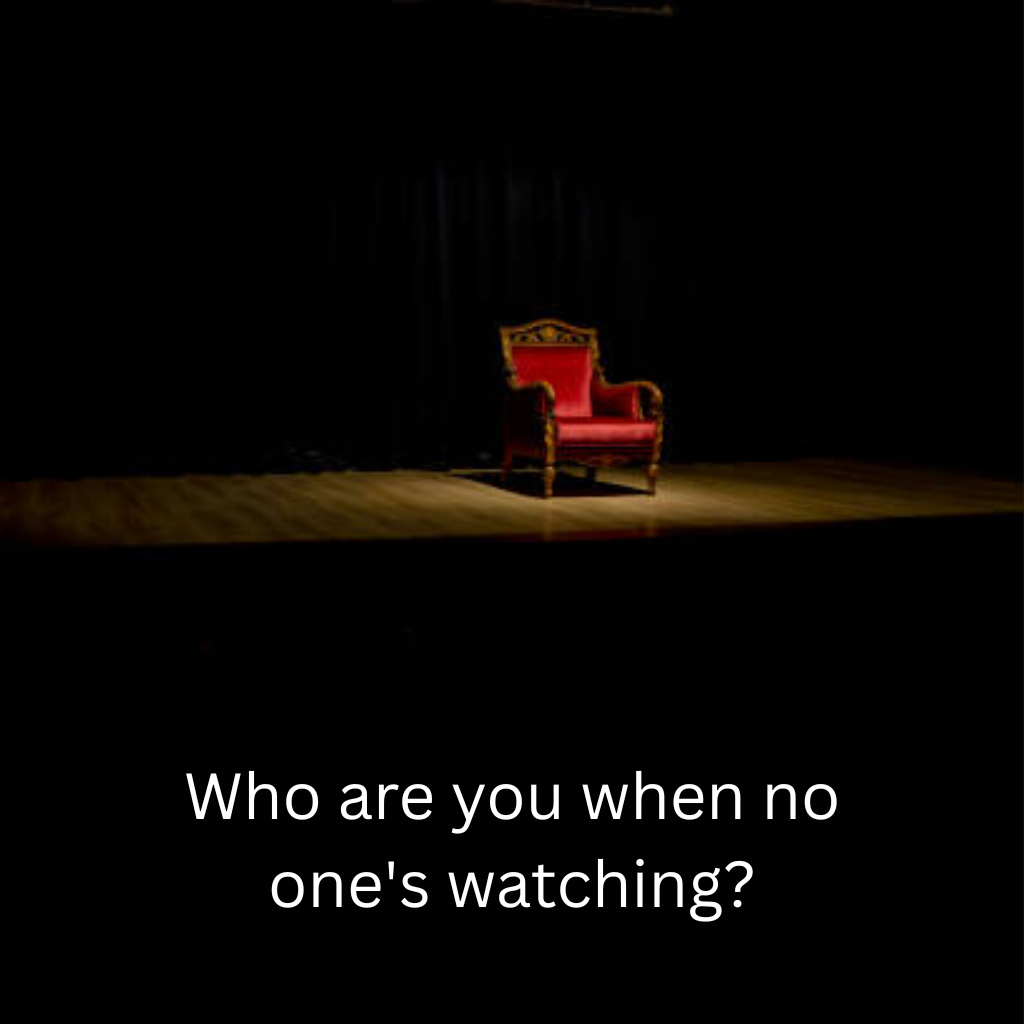
Most of what we do in life is invisible. The meals we cook, the notes we scribble, the walks we take, the quiet thoughts that pass through our heads—none of these are broadcast to the world. Yet we live in an age where the measure of value often lies in how many people see it, like it, or applaud it. The idea that something might matter even if no one notices has become almost alien.
But what if the truest test of a life is how we act when no one is watching? What if the weight of character lies not in the witness of others but in the discipline of the unseen? To live without witness is not to live in obscurity; it is to live with honesty, because there is no performance to uphold.
The Stage and the Self
Human beings crave recognition. From childhood we seek the approval of parents, teachers, and friends. Later it becomes applause, promotion, or prestige. There is nothing inherently wrong in this—praise can encourage effort. But the danger comes when the stage swallows the self. If we only work hard when eyes are on us, then the work is hollow.
Living without witness is the refusal to be shaped by the audience. It is the writer filling pages that no one may ever read. It is the craftsman perfecting a detail that will stay hidden inside a wall. These acts may look small, but they are the seed of integrity. For if you only give your best when the spotlight shines, you have surrendered your freedom to the crowd.
The Quiet Discipline
There is a strength in doing what is right when no one will ever know. The student who studies diligently even when there is no exam tomorrow, the friend who offers kindness without posting it online, the worker who gives full effort without waiting for recognition—these are examples of quiet discipline.
The paradox is that invisible effort builds visible results. The athlete’s unseen training is what makes victory look effortless. The thinker’s long hours in silence give birth to a single line that reshapes how others see the world. What appears as sudden brilliance is often the product of a thousand private acts.
Against the Culture of Display
Modern life thrives on display. We document meals, workouts, achievements, even moments of rest. It is as if life must be validated through proof of its occurrence. But when every act is performed for validation, we risk hollowing out its meaning. The climb becomes less about the mountain and more about the photo at the peak.
Living without witness cuts against this culture. It does not deny the joy of sharing but refuses to let sharing be the measure of worth. It asks us: would you still write if no one read? Would you still create if no one praised? Would you still act with decency if no one noticed? These questions reveal the true substance of our motives.
Freedom in the Unseen
Strangely, there is freedom in being unwatched. Without an audience, you no longer need to prove, perform, or protect an image. You are free to fail, free to learn, free to start again without shame. Living without witness allows for growth, because the mistakes are your own and not a spectacle for others.
This freedom also deepens purpose. When you know no one will notice, the only reason left to act is because it matters to you. That clarity strips life of pretension. You no longer decorate your actions for others but refine them for yourself.
The Measure of a Life
In the end, most of our lives will pass without record. The meals cooked, the jokes shared, the private acts of care—they will fade into memory. This is not cause for despair but for humility. Greatness is not always measured in monuments or memoirs. It is found in the fabric of days, in choices made without audience, in quiet consistency.
To live without witness is to live as though the act itself is enough. It is a rebellion against vanity, a call to sincerity. The question is not “who will see this?” but “is this worth doing?” Answer that honestly, and you live with integrity.


Leave a Reply