
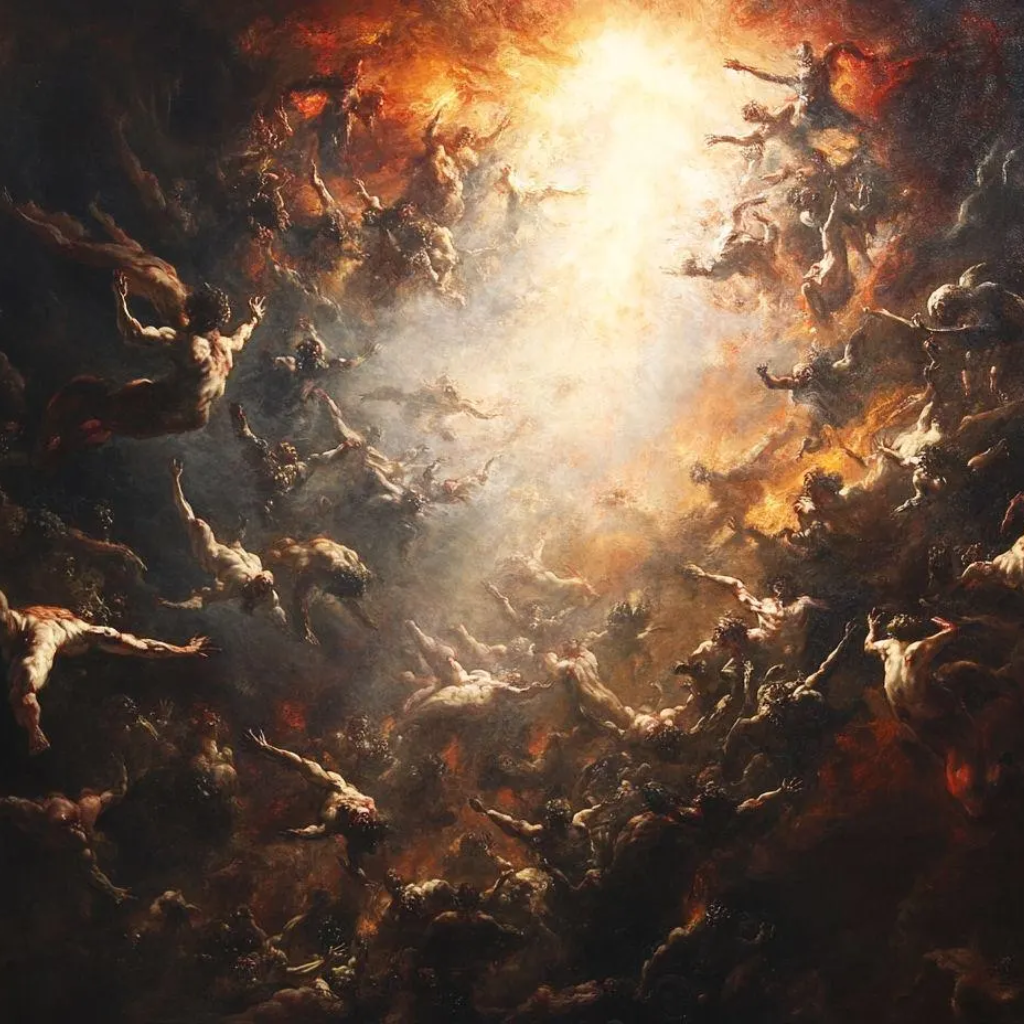
When you do something good for someone, you usually feel a quiet pull inside you, a small voice reminding you that goodness might return to you one day. That your kindness is being written somewhere. That you are building credit for a better ending. It is subtle, but it is there. Almost every religion captures this human instinct in the same structure: a heaven waiting for the good and a hell waiting for the ones who tear life apart. Heaven is a reward, a promise. While hell is punishment and a threat, but both are a pathway
what would happen if both heaven and hell disappeared from the story? What if there was no fire to fear and no paradise to hope for? What if doing good returned nothing at all except the quiet satisfaction that you acted as a decent human? Most people would lose their reason to try. The pressure would fade. The motivation would shrink. Without the fear of punishment, millions would drift back into the comfort of selfishness because there would be nothing to hold them accountable. And without the promise of reward, the tired, heavy feeling of doing good would not feel worth carrying. Goodness without consequence is rare, almost unnatural, unless it is coming from a heart that life itself has failed to twist.
Why Humans Need Consequence
The truth is simple but uncomfortable: humans behave better when they believe someone is watching, even if that “someone” is invisible. Consequence gives structure to our moral instincts. It keeps the selfish part of us in check. Without a structure, the mind collapses into convenience. It chooses the easy way every time. Heaven and hell exist not just to reward or punish but to shape the human character before death. They remind us that our actions echo beyond the present moment. They whisper that every cruel choice is not a harmless mistake but a seed that will grow somewhere we do not want to see. There is a reason all religions depict someone watching over us because it will force us to “be good” and guilty if we do actions we should not be doing.
People speak often about being a good person, but goodness without consequence is the hardest kind to maintain. It demands inner strength, not external fear. It demands a sense of responsibility that does not depend on being judged. Very few people reach that level. Most need a reason, a structure, a fear, a hope, something beyond the short window of daily life.
The Myth of the Naturally Good Human
It is romantic to say all humans are good at heart. But the heart is not naturally good or naturally evil. It becomes what the world shapes it to be. A child born with softness can become cruel through pain. A child born into chaos can become generous through guidance. We are not fixed creatures but open clay, shaped by experiences that either teach us to care or teach us to survive.
If heaven and hell did not exist, the number of genuinely good humans left would be frighteningly small. Only the ones who cannot be broken by pain, who cannot be twisted by the coldness of society, would remain pure. Their goodness would not come from fear or reward but from a kind of inner architecture that suffering could not damage. And because that kind of heart is rare, goodness itself would become a rarity. People would talk about good humans the way we talk about dangerous ones now—with a mixture of fascination and disbelief.
A World Without Moral Architecture
Imagine a world without any belief in an afterlife, without any sense that actions have weight beyond the hour they happen in. Morality would become a personal choice instead of a universal expectation. That sounds freeing, but it is actually terrifying. Once goodness becomes optional, it becomes extinct. People would help only when it benefits them directly. Compassion would shrink into a luxury. Sacrifice would look foolish. And the ones who still chose good would feel like strangers in their own world, standing out the way villains stand out now.
Without moral architecture, the world becomes a place ruled by convenience. You hold the door only if someone holds it for you. You help someone only if someone helped you first. You give only when getting something back is guaranteed. Life becomes a marketplace where everything is a transaction.
The Quiet Strength of the Unrewarded Good
Yet, even in such a world, a few people would continue to act with a clean heart. Not because of heaven. Not because of hell. Not because they fear punishment or crave reward. But because their moral instinct is alive in a way that does not depend on consequence. Their goodness comes from an understanding that humanity is held together by invisible acts. Their inner dignity would remain untouched even if the world around them offered no applause.
These are the people who do good in silence. They do not announce or display it. They act because the alternative feels like a betrayal of themselves. Their goodness is self-respect. Their morality is self-discipline. Their heart does not need a reward to remain awake.
The One Thing That Can Replace Heaven and Hell
If heaven and hell were erased, only one thing could take their place: a sense of responsibility to the people you will one day become. When you choose good, you carry the weight of your future self because the future is built on today. You protect the version of you that must live with your decisions. You keep your identity clean. You stand in front of the mirror knowing you have not stained your own mind.
This responsibility is harder than fear and quieter than hope, but it is stronger. It comes from choosing to live in a way where your actions align with the human you claim to be. That is the true test. Not the reward. Not the punishment. But the quiet battle between who you are now and who you should become.
When you choose good without heaven and hell, you become the rarest kind of human — the one who acts rightly even when no one is watching. but for majority of humans they need a heaven and a hell to be “good” and even than that’s not enough for some.


Leave a Reply