
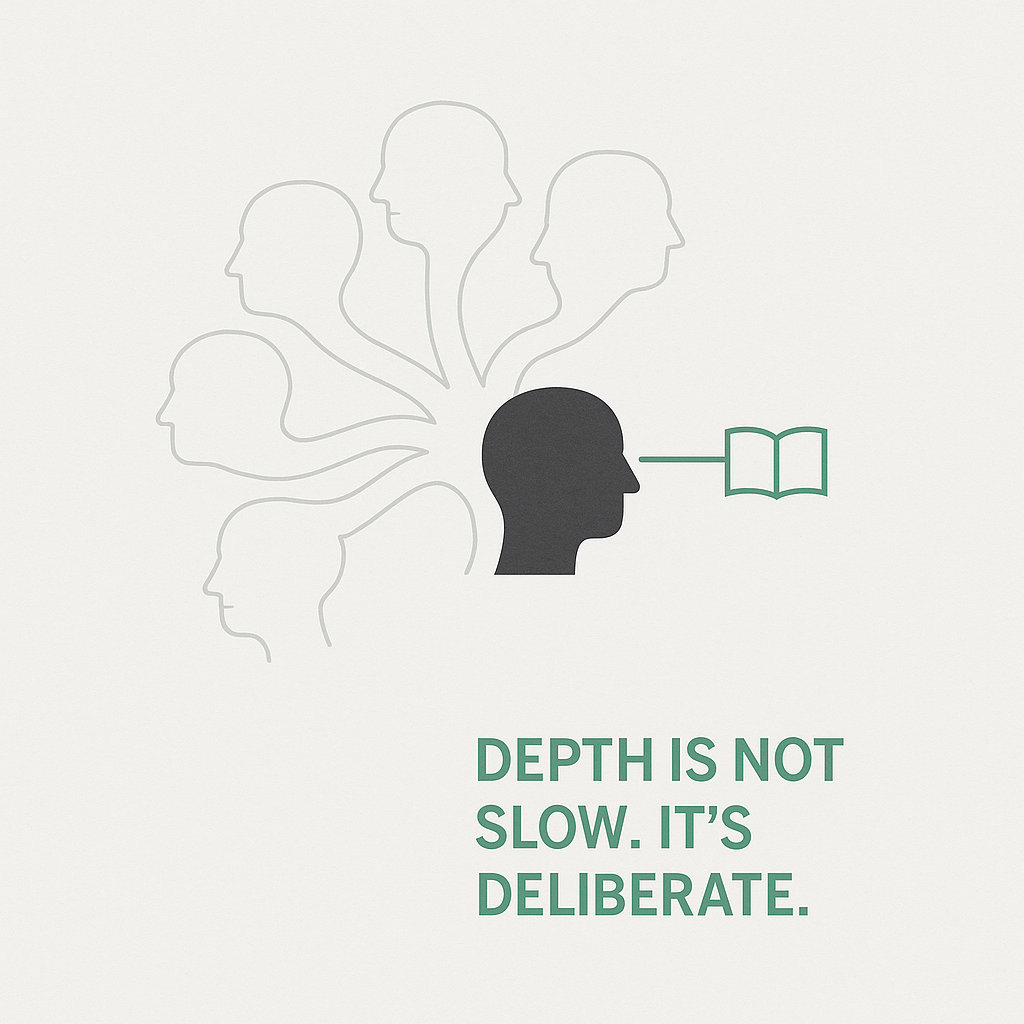
Modern life trains us to split our attention. We check messages while working, skim articles while eating, plan tomorrow while living today. We wear our ability to multitask like a badge. It feels productive. It feels necessary. In a world of constant noise, focusing on one thing seems wasteful.
But this confidence hides something deeper. Multitasking does not multiply your power. It divides it. Every switch carries a hidden cost. Your mind loses seconds every time it pivots, and those seconds grow into hours unnoticed.
The Science Behind the Illusion
Researchers at Stanford found that people who multitask heavily perform worse on tasks requiring attention, memory, and mental control. The mind is not wired to run many high-level processes at once. It can switch quickly, but every switch comes with friction.
Psychologists call this the “switch cost.” When you jump from writing an email to reading a message, your brain keeps traces of the previous task. It takes time to clear and refocus. Even if you feel fast, your depth suffers. The quick glance becomes a habit. You end up living on the surface.
Why Shallow Focus Feels Safer
Deep focus is demanding. It brings you face to face with complexity and doubt. Multitasking, on the other hand, keeps your mind busy enough to feel active yet distracted enough to avoid discomfort. It feels like you’re doing more, but you’re rarely doing what matters most.
Busyness becomes a shield. It protects us from asking hard questions. Why am I doing this? Does it matter? By filling every moment, we silence that small voice that wants to slow down and think deeply.
The Hidden Damage
When life becomes a stream of divided attention, small costs accumulate. Your creativity fades because creativity needs quiet. Memory weakens because memories form best when you are fully present. Relationships thin out because true connection needs undivided attention.
The real loss is harder to see. You stop experiencing life fully. Meals become quick bites between tasks. Conversations turn into shared monologues. Even rest loses its power because your mind keeps drifting to what else it could be doing.
Multitasking Changes How You See Yourself
Every time you split attention, you reinforce an idea: that nothing deserves your whole mind. Over years, this changes not just how you work, but who you are. You may start to feel restless in stillness. You may start to fear silence because silence reveals what noise hides.
You become a collector of unfinished thoughts, half-read books, and shallow connections. Achievement becomes checking things off rather than making something meaningful.
A Return to Single Tasking
The solution is not to work harder but to choose differently. Begin with small acts of presence. When you eat, just eat. When you read, just read. Notice the urge to reach for another screen or thought. Let it pass.
Set aside time blocks for single tasks. Protect them from interruption, both digital and mental. Your mind, like a muscle, grows stronger through focused use. Over time, depth feels more natural than distraction.
Famous Minds Who Chose Depth
Great thinkers and creators often guarded their focus fiercely. Carl Jung built a stone tower in the countryside where he worked without electricity or phone. Maya Angelou wrote in a rented hotel room with nothing but a bed, a Bible, and a bottle of sherry. Steve Jobs was known for ruthless simplicity, keeping meetings and attention focused on one problem at a time.
They understood that deep work is not an accident. It is a choice and often a sacrifice. But it is also the path to creating work that lasts.
The Gift of Undivided Attention
When you give full attention to your work, relationships, or even a simple walk, you experience something rare: wholeness. Your mind and body align in the same moment. That alignment brings a quiet joy that scattered living cannot.
You stop measuring days by tasks completed and start measuring by moments truly lived. You remember what you saw, heard, and felt because you were there, not just passing through.
Final Thoughts
Multitasking feels modern but it costs more than it gives. It promises speed and delivers shallowness. It promises freedom but binds you to constant noise. Choosing to do one thing at a time is not backward. It is the way to live forward, with clarity and care.
A life well lived is not a life stuffed with half-finished moments. It is a life of fewer but deeper moments. The mind that can give itself fully creates more, connects better, and remembers longer.


Leave a Reply