
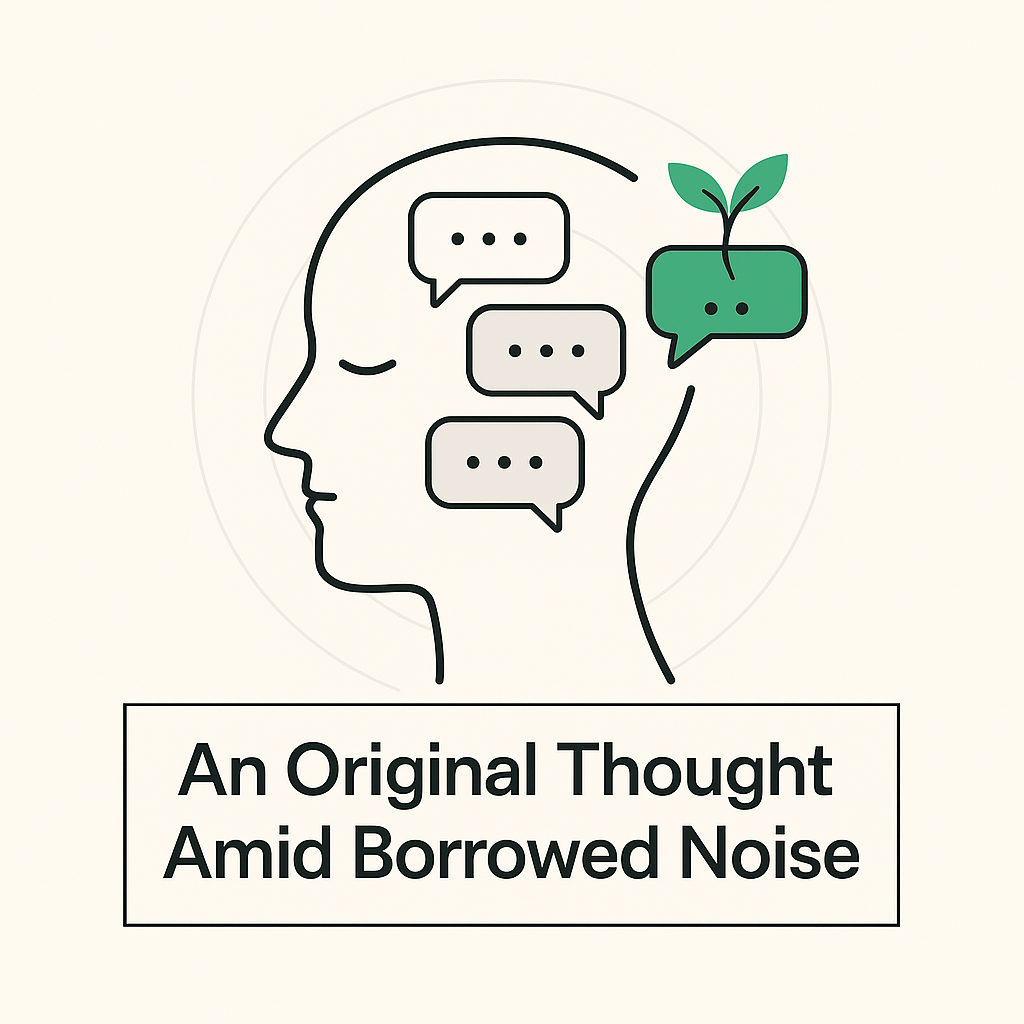
We inherit more than genes. We inherit opinions. Ways of seeing the world. Stories about who we should be. Before you even knew what thinking was, you were absorbing voices: from parents, from teachers, from screens. By the time you could speak for yourself, you were already echoing others.
This isn’t weakness. It’s nature. We learn by mimicry. But what starts as survival becomes a trap. One day, you reach for a belief—and realize it isn’t yours. You defend a value you never questioned. You follow a path you never chose.
The Noise We Mistake for Thought
Modern life is loud. Opinions are everywhere. They shout from headlines, scroll feeds, and group chats. And most people mistake this flood for thinking. They consume takes instead of forming them. Agreement feels safe. Contradiction feels risky. So people nod. Share. Retweet. But ask them what they truly think, and silence often follows.
Borrowed opinions are easy. Thinking is hard. It requires stillness. Time. Doubt. And in a world that rewards speed, doubt looks like weakness. But doubt is not weakness. It’s where real thinking begins.
The Cost of Agreement
When you don’t question what you believe, you live someone else’s life. You vote how your family does. You pursue success as others define it. You chase goals because they sound impressive. But inside, something feels off.
That misalignment is not failure. It’s a sign. A prompt. A whisper that says: this isn’t you. When you live by borrowed beliefs, you often end up with achievements that feel hollow. The diploma doesn’t satisfy. The job drains you. The praise doesn’t land. Because the ladder you climbed wasn’t yours to begin with.
Why Most People Don’t Think Deeply
Deep thinking is uncomfortable. It challenges identity. It threatens belonging. When you start asking questions, people get uneasy. Especially those who never asked themselves. You risk being seen as difficult, rebellious, even arrogant.
But the alternative is worse. To never ask. To never wonder. To live your whole life as a ventriloquist for someone else’s ideas. That isn’t peace. That’s quiet desperation.
The greatest thinkers weren’t celebrated for fitting in. They were often exiled, ridiculed, or ignored. But they had one thing in common: they thought for themselves. Even when it hurt.
How to Think Again
It begins with one question: Do I truly believe this?
Not because you were told. Not because it’s popular. But because, in the silence of your own mind, it holds.
Read slow. Sit with ideas that unsettle you. Talk to people you disagree with. Not to win. But to learn. Practice the rare art of changing your mind. Build a belief not on what feels comfortable, but on what feels honest.
Question your opinions like a carpenter tests wood. Tap. Press. Look for cracks. And if you find one, don’t be ashamed. Be glad. You’re making space for something sturdier.
The Reward for Thinking for Yourself
When your beliefs are your own, they steady you. You don’t need applause to stand firm. You don’t need trends to feel informed. You know what you think, and why. That clarity becomes a compass.
In times of noise, you stay grounded. When others panic, you pause. When the world flips its script, you don’t scramble—you read deeper.
This isn’t arrogance. It’s integrity. You’re not above others. You’re simply more rooted in yourself.
Final Thoughts
There’s no shame in having borrowed ideas. We all begin that way. But growth demands more. It asks you to think again. To cut through the noise. To hear your own voice beneath the echo.
In a world of borrowed opinions, having your own is an act of courage. And living by them? That’s how you reclaim your life.


Leave a Reply