
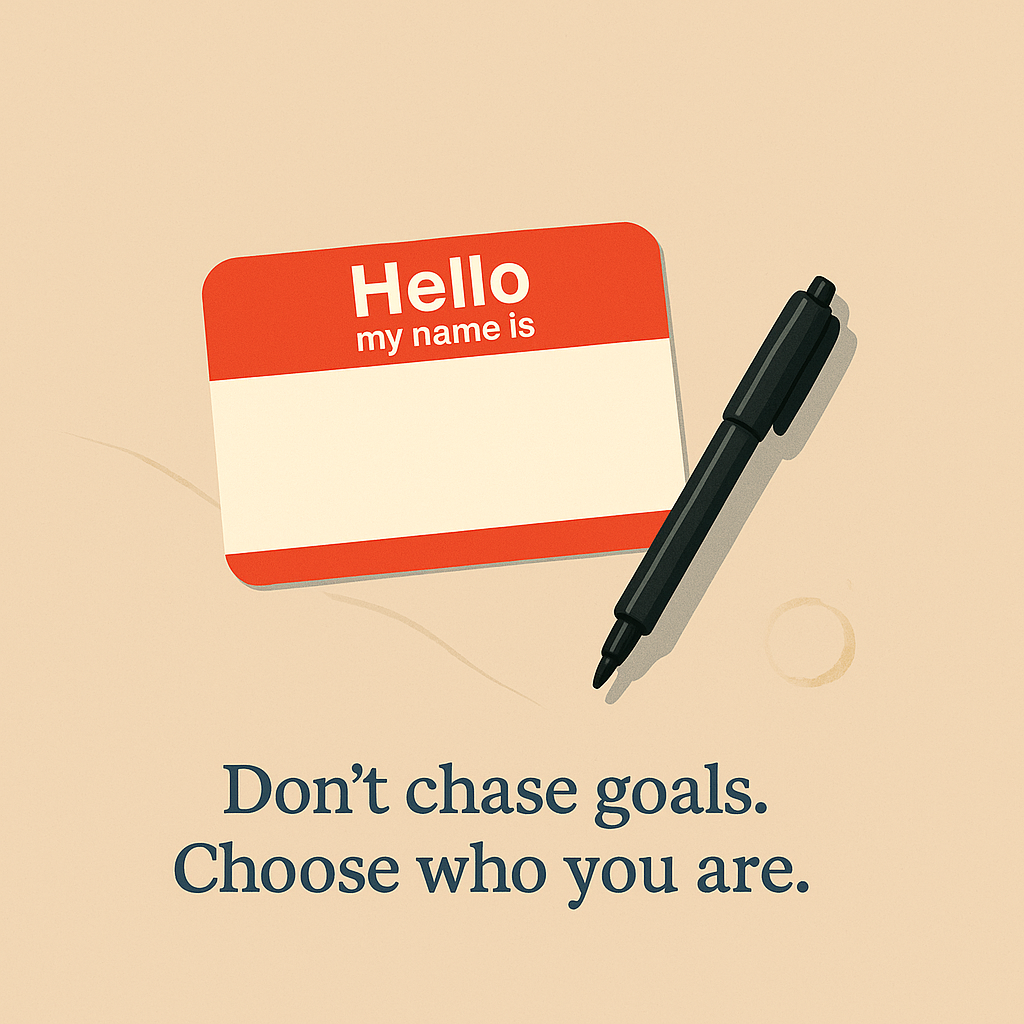
We often set goals with good intentions: lose ten pounds, write a book, earn more money. But beneath these ambitions is a dangerous flaw. We chase results without examining the identity behind them. This is why most goals fail. They’re built like trophies instead of tools. They focus on what we want to have, not who we want to become.
The Flaw in Outcome-Obsessed Goals
When you focus only on outcomes, you set yourself up for short-term thinking. You train your mind to treat success as a destination. Lose the weight, and you’re done. Finish the book, and the goal ends. This makes achievement fragile. It depends on motivation, ideal conditions, and constant willpower. The moment life shifts, the goal falls apart.
Goals that chase outcomes are often disconnected from who you are. You might aim to wake up at 5 a.m. every day, but if you still believe you’re not a morning person, you’ll always fight yourself. That internal conflict wears you down. The result? Guilt. Shame. Quitting.
The Identity-Based Alternative
There’s another way to set goals—one that actually works. Instead of asking, “What do I want to achieve?” ask, “Who do I want to become?”
This shift turns every action into a vote for your identity. You no longer write a book just to finish it. You write because you are a writer. You don’t exercise to hit a number on the scale. You move your body because you are someone who values health. Identity gives goals longevity. It makes them a way of living rather than a finish line.
Real Examples That Prove the Point
Take someone who sets a goal to meditate daily for thirty days. If their goal is purely to complete a habit tracker, they might succeed—but only for a while. But if their deeper goal is to become someone who is calm and mindful, the habit continues. It doesn’t need a chart. It becomes part of who they are.
Or imagine a student who aims to get straight As. That’s a clear, measurable goal. But if it’s rooted only in external reward, stress and burnout will follow. If, instead, the student wants to become a curious, disciplined learner, then the grades become a byproduct, not the goal.
Why Identity Goals Stick
Your brain wants consistency. It acts in ways that match your self-image. When you shift your focus to who you are becoming, your actions feel natural. They reinforce the identity rather than clash with it.
This is why identity-based goals are so powerful. They survive boredom. They persist through failure. Because even when results don’t show up, the effort still counts. The goal hasn’t failed; it’s still shaping you.
The Science Behind It
Behavioral psychology backs this up. Studies show that identity-congruent habits are more sustainable over time. In one study, people who saw themselves as “voters” were more likely to vote than those who were just told to vote. The difference was simple but profound: identity drove behavior, not obligation.
James Clear, in his book Atomic Habits, echoes this idea. He writes, “The ultimate form of motivation is when a habit becomes part of your identity.”
How to Set Identity-Based Goals
Start by asking: Who is the kind of person that achieves what I want?
Want to run a marathon? Become a runner. Want to master coding? See yourself as a developer, even before you’re great. Want to become more disciplined? Start by doing one small thing each day that a disciplined person would do.
Each action reinforces the story you tell about yourself. And over time, the story becomes true.
Overcoming the Fear of Letting Go
Many people cling to outcome-based goals because they feel safer. You can measure them. You can show them off. But identity goals ask more of you. They demand belief before evidence. That’s why they work.
Letting go of the old model may feel uncertain. But ask yourself: which kind of goal gives you energy? Which one inspires you to keep going even after failure? That’s the one you build your life around.
Final Thoughts
Most goals fail not because you’re lazy or unfocused, but because they were designed wrong. They aimed at results without grounding in identity. They chased the end, not the becoming.
But you can change that. You can build goals that last. Start with who you want to be, not just what you want to have. Then act in small, daily ways that align with that vision.
Over time, your habits become your identity. And your identity shapes a life that no result alone could ever give you.
Choose wisely. The goal is not the destination. It’s the kind of person you become along the way.


Leave a Reply