
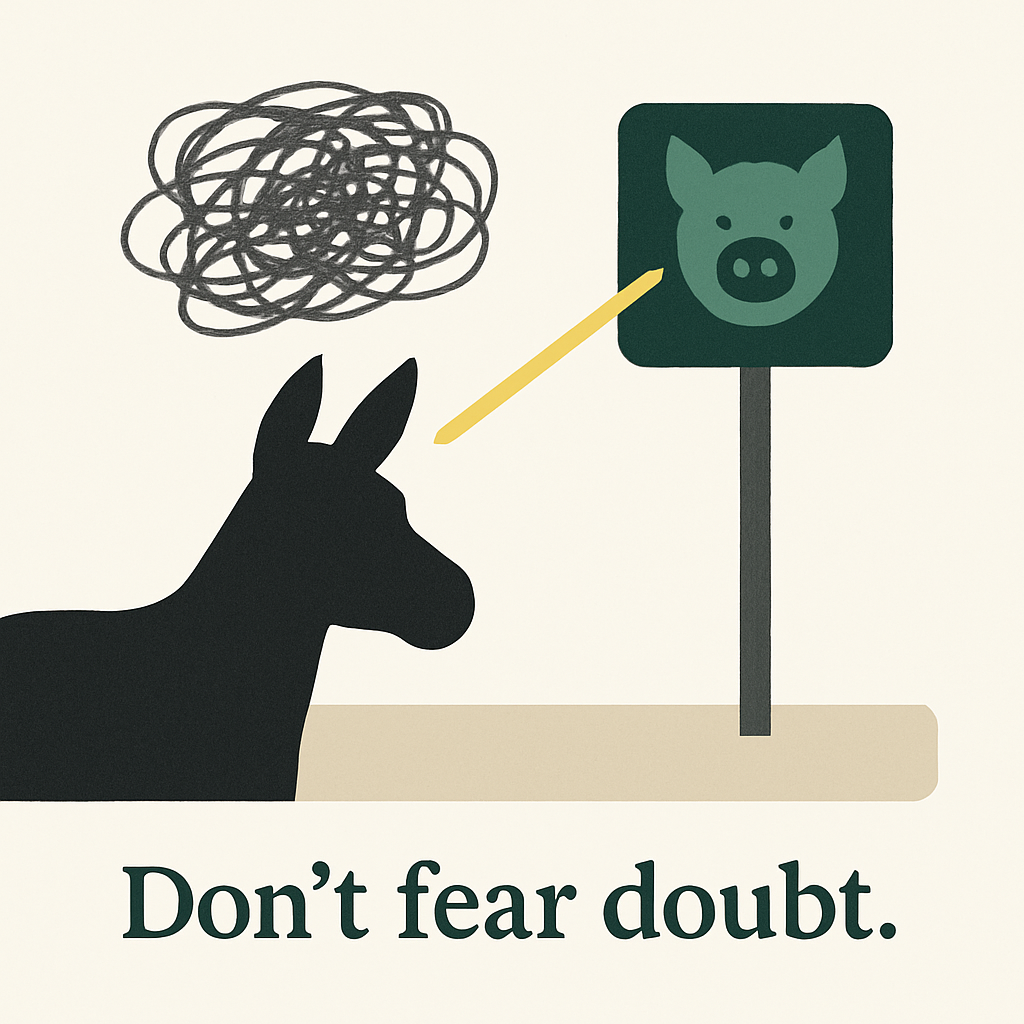
Once a revolution begins, it carries hope. Promises of fairness, truth, and freedom. But soon, that hope is replaced with fear. Not from outside forces—but from within. Animal Farm showed us how power rewrites truth. But more importantly, it showed us how fear of doubt sustains that lie. Not Snowball, not the pigs, but the silence in the animals’ hearts. That is what truly kept them chained.
The Dangerous Power of Doubt
Snowball, the pig cast out early in the story, becomes the scapegoat for every problem. The crops failed? Snowball. The windmill fell? Snowball. This wasn’t strategy alone—it was a smokescreen for something deeper. The real tool of control wasn’t punishment. It was the idea that questioning the official story made you disloyal.
This is how fear grows. Not as fear of enemies, but as fear of thinking. The animals knew something was wrong. They remembered different commandments. They felt the hunger, the fatigue, the lies. But they told themselves not to think. Because thinking meant doubt. And doubt meant danger.
We Fear What We Know
Doubt is not ignorance. It is knowledge pushing against belief. The animals saw contradictions. They heard Squealer twist words. But they also saw what happened to those who asked questions. So they looked away. They chose comfort over truth, silence over clarity.
This happens outside of fiction, too. In our world, we inherit narratives. About politics, religion, success. We hear what to believe and are told who the enemy is. And when something feels off, we hesitate. Not because we’re unsure. But because we are sure, and the consequences of speaking up are real.
Why Snowball Had to Be the Villain
It’s easy to rally against someone. Harder to rally for an idea. Snowball represented what the revolution could have been—fairer, maybe freer. But his presence reminded everyone of how far things had fallen. So the leadership buried that memory. They turned him into a ghost of blame.
The trick worked not because the animals were stupid. But because they were scared. Not of Snowball. Not of Napoleon. But of themselves. Of their own memory. Their own doubts. Because once you admit something is wrong, you have to decide what to do. That decision is terrifying.
The Cost of Disbelief
We like to think we’d notice if the rules changed. If truth was erased. If leaders became tyrants. But the real shift happens slowly. The commandments on the wall fade. New ones appear. The stories change, and we change with them.
Not because we’re blind. But because we’re tired. Life is hard. Work is constant. And doubt requires energy. So we accept half-truths. We nod at speeches we don’t believe. We share headlines we never read. We call it unity, but it’s really surrender.
The Real Fight Is Internal
The animals didn’t need new leaders. They needed courage to think. But courage doesn’t come all at once. It comes in moments. In the small, quiet decision to say, “This doesn’t feel right.” And to not silence that voice.
We all have that voice. We hear it when something doesn’t add up. When we pretend to agree, but feel a sting inside. That’s not weakness. That’s the beginning of strength. Doubt is not the enemy. It’s the seed of truth.
Truth Doesn’t Need Fear
Real truth doesn’t hide from questions. It grows stronger when tested. But lies demand obedience. They survive by making doubt dangerous. That’s why regimes, whether fictional or real, always attack the doubters first. Because they know the threat isn’t a different idea. It’s the act of questioning itself.
If you believe in something because you’re afraid not to, then you don’t believe it at all. That’s why Orwell wrote Animal Farm the way he did—to show how easy it is to trade thinking for comfort, freedom for illusion.
Final Thoughts
Snowball wasn’t the real danger to Animal Farm. He wasn’t perfect, but he wasn’t the problem. The problem was fear of doubt. The quiet refusal to look too closely. The shame in wondering, the silence after suspicion.
We still do it. In schools, in jobs, in families. We let some truths pass untested because it feels safer. But nothing erodes freedom faster than the death of doubt.
So ask yourself: What have you accepted because it was easier than asking? What stories have you inherited, shared, repeated—but never challenged?
Because in the end, the most powerful weapon isn’t the lie. It’s our fear of discovering the truth.


Leave a Reply