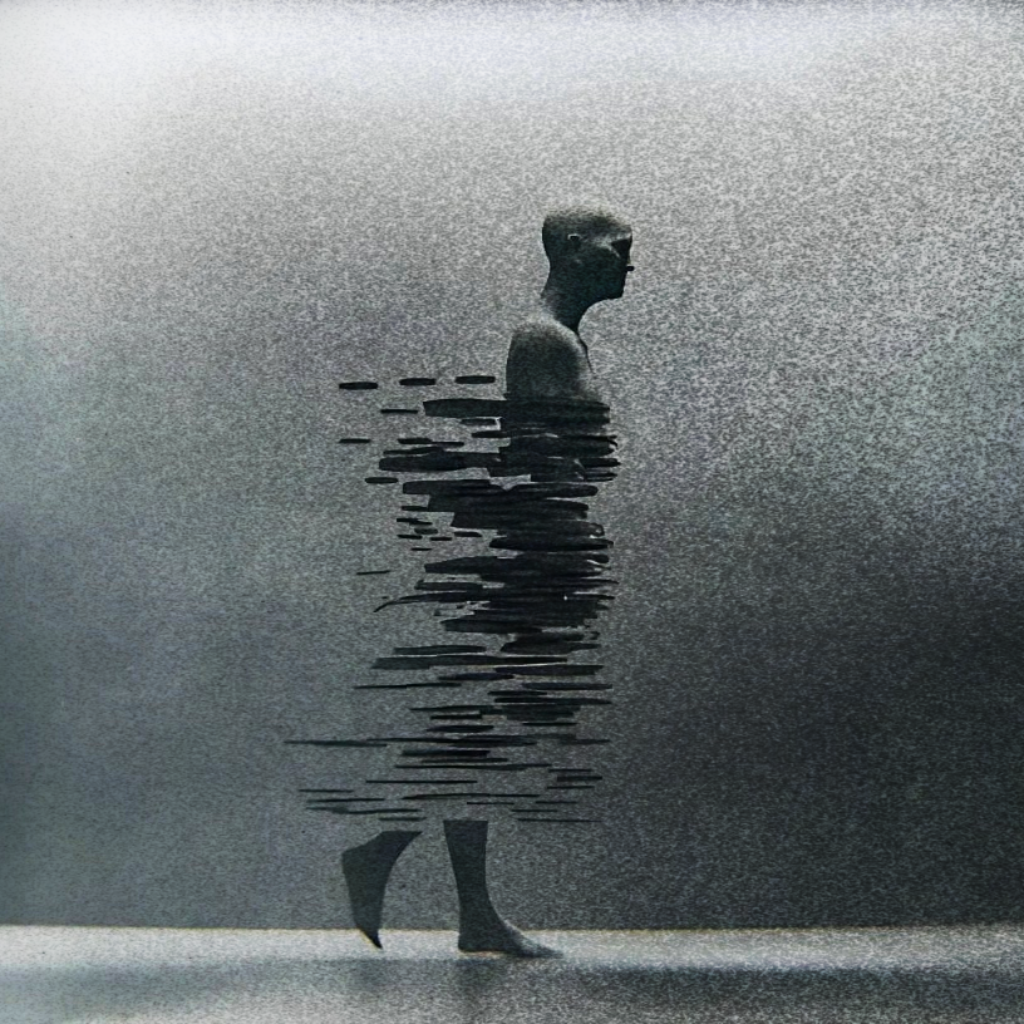
We often measure a life by what a person does—how many books they wrote, businesses they built, or projects they completed. Yet beneath these visible actions lies something heavier, something that cannot be listed in a résumé. It is thought. The writer Alain de Botton has argued that the ideas we carry within us are weightier than the things we outwardly achieve. This claim seems strange in a culture that celebrates hustle, results, and constant productivity. But if we pause long enough to reflect, it becomes clear: thought is the soil from which all action grows.
The Invisible Gravity
An action is fleeting. You speak, you write, you decide, and it is done. But thought lingers. It is the quiet current shaping every move before it surfaces. We underestimate this invisible gravity because it does not leave the same tangible trace as an action. A person’s worldview—how they think about success, failure, or love—can direct decades of choices.
To believe, for instance, that happiness lies only in wealth is not a single action; it is a thought that bends an entire lifetime toward certain pursuits. To imagine that meaning comes only through recognition may guide someone to chase applause, even when their inner life is left barren. One thought can shape a whole destiny. Actions may be the steps, but thought decides the road.
Why Thought Is Heavier Than Action
The weight of thought lies in its permanence. We forget most of the actions we take in a day, but we carry our thoughts with us like an inner architecture. Even if they are invisible, they form the foundation of character.
A kind act matters, but the thought that drives kindness is more decisive. One person might help a stranger out of pity, another out of duty, and another out of love. The action looks the same, yet the thought behind it changes its meaning entirely. It is not the hand that moves which matters most but the mind that steers it.
This is why philosophers like Alain de Botton remind us that reflection is not a luxury but a necessity. Without it, our actions may be endless yet shallow. We risk being busy but blind, moving quickly yet never questioning whether the direction is true.
Action Without Thought
The modern world idolizes action. We are told to “just do it,” to start before we are ready, to keep moving no matter what. There is truth in this; hesitation can be its own prison. Yet action without thought is like running without a map. It leads to exhaustion more than progress.
A student who studies without thinking about why knowledge matters may pass exams but never gain wisdom. A worker who labors without reflecting on purpose may climb a ladder only to find it leaning against the wrong wall. The danger is not in acting but in acting without the weight of reflection.
Thought Without Action
At the same time, thought alone cannot carry us. To sit and think forever without moving is to turn life into abstraction. Ideas gain their fullest meaning only when tested in the world. A thinker who never acts risks suffocating under their own weight, burdened by possibilities that never turn into realities.
The balance, then, is not to exalt thought over action or action over thought, but to see their relationship more clearly. Thought provides the depth; action gives it form. The weight of thought is what gives action its true significance. Without thought, action is empty. Without action, thought is incomplete.
The Lifelong Conversation
What we carry in our minds is not fixed. Thoughts evolve, shift, and mature as life unfolds. The ideas we once clung to may loosen their grip, while others grow heavier with time. To live well is to stay in conversation with our own thinking, to test it against reality, and to refine it with experience.
A life shaped by careful thought is not necessarily louder or more impressive than others. It may not produce monuments or headlines. But it produces something subtler: a steadiness, a clarity of vision, a coherence between what one believes and what one does. In the end, this coherence is more powerful than sheer productivity.
Living With the Weight
Recognizing the gravity of thought should not make us passive. Rather, it should make us more deliberate. It should remind us that before rushing into the next task, it is worth pausing to ask: What is guiding me? What idea is pulling me forward?
Actions are the ripples we leave on the surface of life, but thoughts are the current beneath. As Alain de Botton suggests, it is our thoughts—our philosophies, our quiet convictions—that weigh most heavily. To carry them well is to live with intention. To ignore them is to risk being carried away by forces we never saw.
The heaviest burden is not what we do but what we believe. To shape our thoughts is to shape our lives.


Leave a Reply